

What is a Caste Census?
It involves documenting the caste identity of individuals in the national census or through a separate survey. While India's population is already classified by Scheduled Castes (SC) and Scheduled Tribes (ST), a full caste enumeration, including Other Backward Classes (OBCs) and other general categories, has not been done since 1931 (pre-Independence).
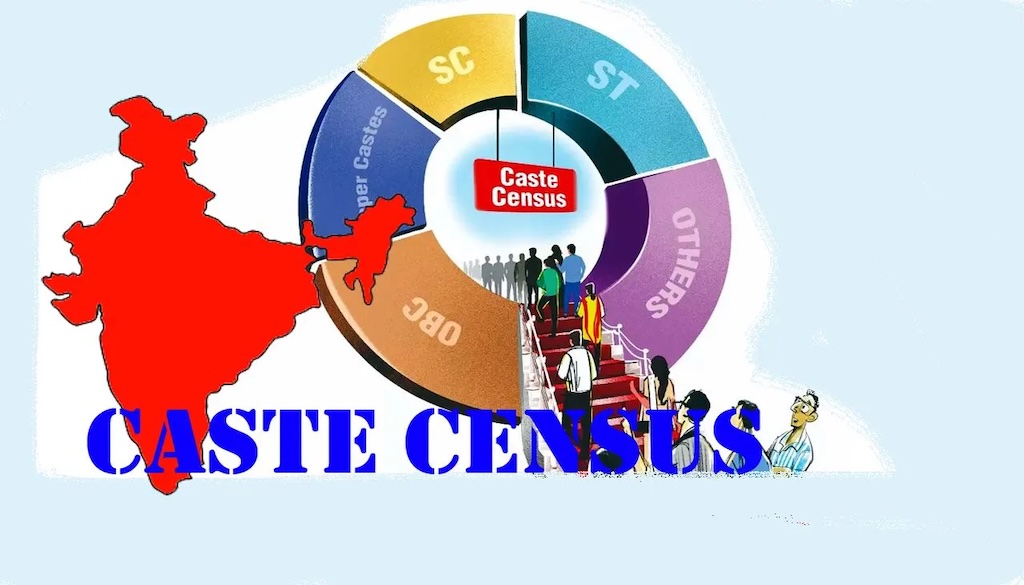
first census of independent India in 1951, the government chose to discontinue the practice, except for Scheduled Castes (SCs) and Scheduled Tribes (STS).
By 1961, the Government permitted states specific lists of Other Backward Classes (OBCs), if they wished.

1931 Census:
The last time comprehensive caste data was collected. Post-Independence, caste enumeration (other than SCs and STs) was dropped to promote national unity.
Socio-Economic and Caste Census (SECC) 2011:
Collected caste data along with socio-economic data. However, the caste data from SECC was not released officially due to concerns about accuracy and inconsistencies
Demand for Caste Census:
Opposition to Caste Census:
Others believe caste data could be misused politically.
Recent Developments :-
Bihar Caste Survey 2023: Conducted independently by the Bihar state government, it released comprehensive caste data for the state, revealing that OBCs and EBCs (Extremely Backward Classes) form over 60% of the population.
Sparked a national debate and renewed calls for a nationwide caste census.
National Political Discourse:
Some opposition parties (like the Congress and regional parties) have pushed for a nationwide caste census.
The central government has been cautious, stating caste enumeration is complex and may lead to social tensions
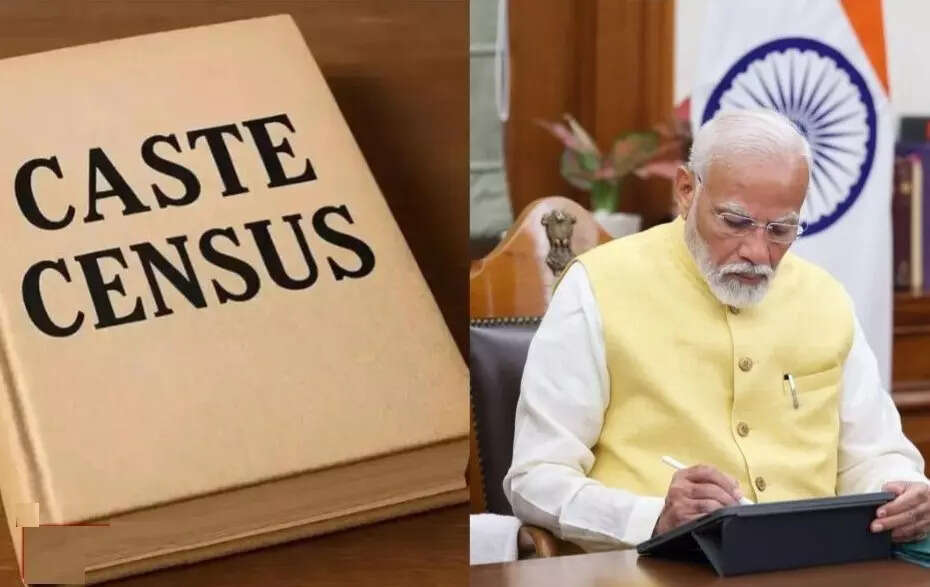
The Congress and BJP, then the main Opposition party, did not have a clear-cut position on caste census although a section of the OBC leaders within the parties were in favor. The Home Ministry under P. Chidambaram argue that including caste in the list of questions during the Census exercise would yield inaccurate results owing to logistical problems.
“Population Census is not the ideal instrument for collection of details on caste. The operational difficulties are so many that there is a grave danger that the basic integrity of the Census data may be compromised and the fundamental population count itself could get distorted,” the Home Ministry told the Cabinet.
But the socialist parties in the Hindi heartland — with OBCs as their main voter base — persisted with their demand. They also vociferously opposed the women’s reservation Bill in its then form as part of this. As they looked for ways to resurrect their OBC politics, for the heartland parties it also made sense to seek caste and community quota within the women’s reservation Bill.
Under pressure, the government agreed to a debate on caste census in Parliament, though some ministers remained opposed. Seeking to broadbase its support beyond Hindutva, the BJP, however, had by then veered around to favouring a caste census.
Over May 6 and 7, 2010, a discussion was held in Parliament on the issue. While it reflected the divisions within the party, a majority of the leaders who spoke, including those from the BJP, favored a caste census.
This prompted the government to review its stand. The Home Ministry, which was opposed to a caste-based census, also nuanced its position and argued that a caste-based headcount can be done — but only after tabulation of Census figures — during the biometric capture phase, when photographing, fingerprinting and iris mapping of citizens for the National Population Register (NPR) would be done.
On May 27, the UPA government finally referred the contentious issue to a Group of Ministers (GoM) headed by then Finance Minister Pranab Mukherjee. The GoM too was sharply divided, and ended up seeking the opinion of all political parties. Most of the parties including the BJP backed a caste-based headcount.
That September, the decision to hold a caste headcount was taken.
In June 2011, the Ministry of Rural Development began the SECC exercise. The study of the socio-economic status of close to 25 crore rural and urban households had three components, divided under three separate authorities but under the overall coordination of the Department of Rural Development.
Census in rural areas was conducted by the Rural Development Ministry, while the study in urban areas was held under the administrative jurisdiction of the Ministry of Housing and Urban Poverty Alleviation. Overall, the caste census was under the administrative control of the Ministry of Home Affairs: Registrar General of India (RGI) and Census Commissioner of India.
But the enumeration of households and tabulation of the data were plagued by delays and missed multiple deadlines. While the enumeration was finally completed by the end of 2012, the data was not ready till the end of 2013.
A UPA minister told that the provisional data was ready by September-October 2013, but with general elections due soon, a call was taken to let the next government release the data.
The UPA lost power in the May 2014 polls, with the Modi-led NDA government coming to power.
After saying that the data would take time to compile, the Modi government in July 2015 released provisional data from the SECC for rural India, while holding back the caste data, saying it had not been finalised. In July 2016, the government told the Lok Sabha in a written reply that it “had directed the Office of the Registrar General and Census Commissioner to process the caste data and hand over the details of the castes / tribe returned in the enumeration to the proposed Expert Group to be constituted by the Ministry of Social Justice and Empowerment and the Ministry of Tribal Affairs to classify these caste/tribe returns”.

The government told the Lok Sabha in March that “certain errors have been observed during processing of the caste data”. The Home Ministry said the caste data had been handed over to the Office of the Registrar General and Census Commissioner for processing. In August, the government told the Rajya Sabha that the processing of caste data was taking time due to certain design issues at the stage of data collection. The reply said the planned Expert Group had not been set up.
In reply to a question in the Rajya Sabha, the Home Ministry said: “The raw caste data was provided to the Ministry of Social Justice and Empowerment for classification and categorization… As informed by (the ministry), there is no proposal to release the caste data at this stage.”
In September, the government, in an affidavit filed in the Supreme Court, effectively ruled out holding a caste census that year, saying “exclusion of information regarding any other caste”, apart from SCs and STs, “from the purview of census is a conscious policy decision“.
As for the SECC, the affidavit said there were “technical flaws” in data collection. It said the exercise had thrown up 46 lakh different castes, and that “the total numbers cannot be exponentially high to this extent”. The Centre said that an analysis of the data showed “that the caste enumeration… was fraught with mistakes and inaccuracies” and “is not reliable”.

In the Hindi heartland, both the opposition and parties in the ruling alliance are celebrating with equal gusto the Union government’s decision to conduct a caste count along the decadal census, with each side pulling pages from history to project themselves as the original proponent of the idea.
Both Samajwadi Party and the RJD have claimed victory for themselves, with former Uttar Pradesh CM Akhilesh Yadav claiming that the decision is a result of “collective pressure”, while leader of opposition in Bihar Assembly. Tejashwi Yadav termed it an “ideological victory”. At the same time, Bihar CM Nitish Kumar commended the decision, while Lok Janshakti Party (Ramvilas) leader and Union Minister Chirag Paswan said the government has neutralised the opposition with this move.

RJD Chief Lalu Prasad Yadav in a long post on X in Hindi said that “socialist ideas, once dismissed or ridiculed” have eventually been adopted by mainstream political forces. “What we socialists proposed 30 years ago — be it reservation, caste census, equality, fraternity, secularism — others take decades to follow. There is still a long way to go. But make no mistake — we will keep making these Sanghis dance to our agenda,” he said, recalling that the decision to conduct caste count as part of the 2001 census was taken by the Janata Dal-led United Front government in 1996-97. “But that move was shelved by the NDA government under Prime Minister Atal Bihari Vajpayee,” he wrote. The demand, he said, was revived in 2011 during the UPA tenure, when he along with SP leader Mulayam Singh Yadav and then JDU leader Sharad Yadav stalled Parliament for several days until the government assured to conduct a socio-economic survey.
